Showing posts with label post-industrial cities. Show all posts

Sunday, June 12, 2011

The Workers: MASS MoCA, I love you.

Dear MASS MoCA,

I have been trying to write this blog entry for two months, struggling to find the right words to say it. It's simple, really: I love you. We are like, totally soul mates. It's ok, I know you have lots of other visitor-soulmates; in fact, I think an open relationship is the best kind of relationship a museum and its visitors can have.

I've known it for a long time. But just when I thought you were practically perfect, this BLOWS MY MIND. And my little heart. A new exhibition: The Workers, May 29, 2011-March 25, 2012.

Ok, from MASS MoCA:

We all know what Rosie the Riveter looked like, and what she stood for. [Oh boy, do we!]

Ford-era production line labor -- and the rise of powerful unions -- left us indelible portraits of work in mid 20th century America. [Don't make me swoon!]...

But what does work look like today in a global economy marked by outsourcing, rapid migration, disruptive economies, and a state of labor that seems fractured, precarious, and almost invisible? With video, sculpture, photography, and performance art from 25 artists, this exhibition examines the way labor is represented today (and how some contemporary workers choose to represent themselves. [Emphasis mine.]

The timing, and the place, could not be more fitting: Once the site of a bustling factory itself -- whose closure in the face of intense international competition left nearly a third of it's community out of work -- MASS MoCA is perhaps uniquely positioned to present this timely show... [Yes! YES!]

And as if all that wasn't enough:

In conjunction with The Workers MASS MoCA curator Susan Cross has invited Bureau for Open Culture -- a nomadic contemporary arts program directed by curator and art historian James Voorhies -- to inhabit one of the museum's buildings for the first four months of the exhibition. Set within a previously unused industrial building on the grounds of MASS MoCA, Bureau for Open Culture presents I Am Searching for Field Character, an exhibition series of public conversations, performances, installations, and workshops with a slew of visiting artists, writers, designers, and thinkers, a well as a beer garden which operates every Thursday and Friday night between May 26 and September 30.

Let me get this straight: CONTEMPORARY ART AND LABOR, HISTORIC INDUSTRIAL SPACES, NOMADIC ARTS PROGRAMS, SUPER-RELEVANCE, AND A...BEER GARDEN??? And then there's the BOC project publication: Bureau for Open Culture: On Symptoms of Cultural Industry. [Preview: WHY is it we are so moved by decaying environments? What propels the creative and cultural, the spontaneous and unpredictable in response to the dilapidation, vacancy, poverty and hardship of crumbling capital? Oh. My.]

I could not possibly make up anything dreamier. Ok, so I'll try not to get too excited before I've experienced it all.

No, I think I'll just got with it.

WHEEEEEEEEEEEEEEEEEEEEEEEEEEE!

Monday, April 4, 2011

Exhibit: Vertical Urban Factory

A new exhibit at the Skyscraper Museum in NYC takes a unique, relevant approach to industrial history with Vertical Urban Factory:


Vertical Urban Factory features the innovative architectural design, structural engineering, and processing methods of significant factory buildings from the turn of the 20th century to the present. Now, over a century after the first large factories began to dominate our cities, the exhibition poses the question: Can factories present sustainable solutions for future self-sufficient cities?


An interesting reminder that factories were once fundamental to the pre-sprawl urban experience, and a potentially powerful platform for considering current realities and future possibilities.


 New York Times review here.

Tuesday, March 15, 2011

Welcome to Pine Point

Welcome to Pine Point

Go have a look at this incredible online interactive multimedia mind blowing documentary about the town of Pine Point way up in Canada's Northwest Territories. The mine built it, a community grew, the mine closed, the town was completely razed.

This site is a testament to people and memory and postindustrial spaces totally unlike anything else.

See also:
Museum 2.0: Welcome to Pine Point: A Multimedia Exploration of Nostalgia, History, and What it Means to be Human. Great anaylsis by Nina Simon at Museum 2.0 linking the techniques used and connections made here to the museum experience.


UPDATE: OK, so http://www.nfb.ca/ is my new favorite website. Enjoy documentaries, animations, alternative dramas and interactive productions on the web, on your personalized home page, or on your iPhone. Free for personal use and on a subscription basis for schools and institutions. Where have you been all my life, National Film Board of Canada??? Canadians are so nice!

Friday, February 25, 2011

Steampunk + Industrial History Museums =...Duh?!

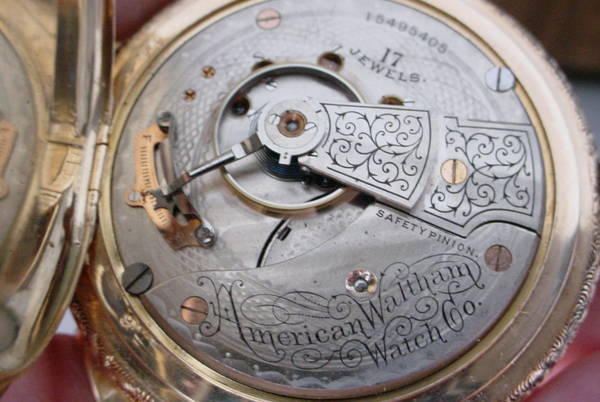
Ok, article from Boston.com like a week ago: Citywide steampunk festival pays homage to Waltham's history

Did you know that International Steampunk City is the "secret identity" of Waltham, MA? Me neither! Anyway, May 6-8 the Charles River Museum of Industry and Innovation -- and the entire city of Waltham, apparently -- will be hosting a huge steampunk event.

Talk about getting experimental with industrial history! Awesome opportunity to delve into the aethetics of Victorian-era industry in new and imaginative ways, or catering to a very specialized subculture? Either way it seems like a pretty natural match. I'm super curious to see how this plays out for the CRMII, and psyched to venture down there in May...

Friday, December 3, 2010

Views of Lawrence

Spent an awesome afternoon in Lawrence, Mass. yesterday. Lawrence is one of the most dramatic post-industrial landscapes I have ever seen, and home to the amazing Lawrence History Center. 100 years ago, Lawrence was the wool textile capital of the world and home to thousands of immigrant families trying to grab an incredibly elusive, often cruel piece of the (not-yet-coined) "American Dream" in the city's cavernous mills.

The mills -- which formed the basis for the city's entire economy -- began shutting down mid-century. Families continued coming from all around the world, particularly from Latin America in the past half-century, putting down new roots and making a life in this old city.

Today, Lawrence is still struggling tremendously with the economically devastating loss of its manufacturing sector. At the same time, there is incredible resiliance, community energy, and life among the often empty (and insanely dramatic) old brick factories. Every time I visit, I'm totally inspired by the History Center. Archive, community center, museum, gathering place, anchor -- this is one tiny non-profit with a big and growing reach in Lawrence. In a city that has seen more than its share of community division and economic dislocation, the Lawrence History Center uses history as a tool to connect people across languages, cultures, and experiences. I urge you to check them out.

Now, some pictures of old industrial stuff: